
Why Green
Aug 20, 2026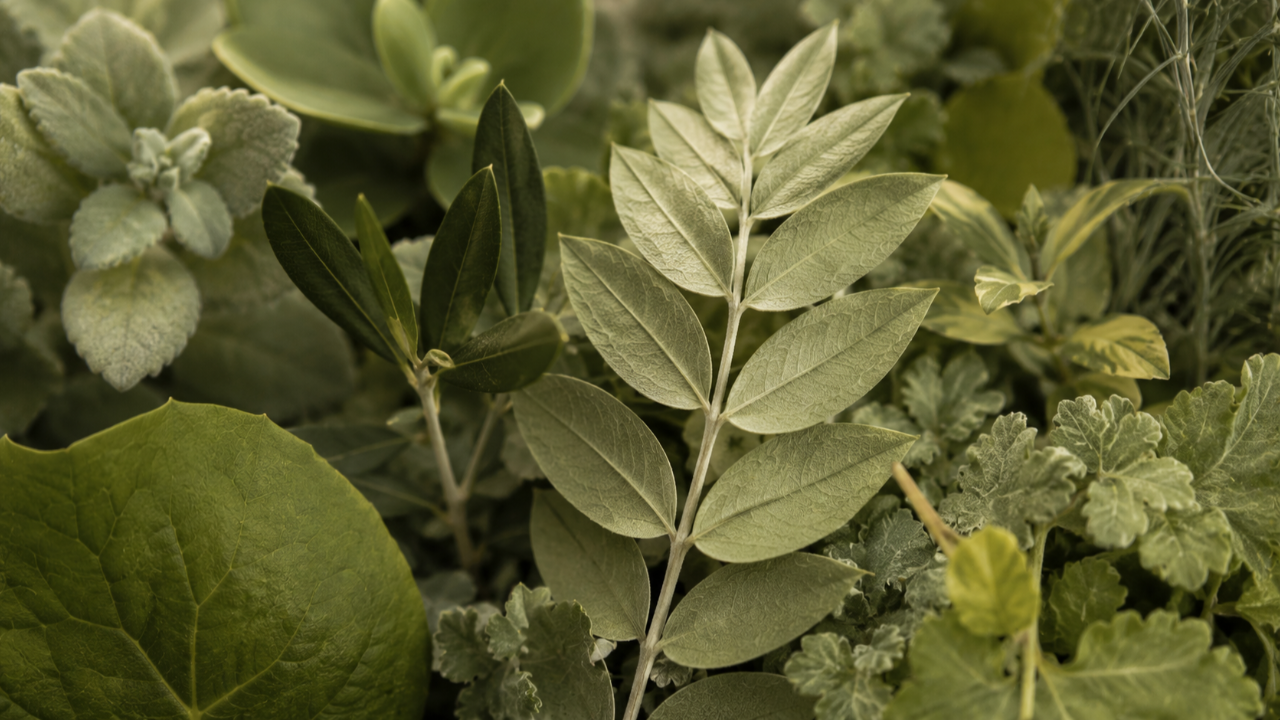
There is a fact about human vision I keep returning to.
The human eye distinguishes more shades of green than any other color. Estimates vary, and the exact count is less interesting than the reason. Our visual system has three types of cone cells, and two of them, the ones sensitive to medium and long wavelengths, overlap heavily in the region we perceive as green. That overlap produces unusual discrimination. We are built to tell one green from another green from a third green that most instruments would call identical.
This is not decorative. It is survival equipment.
Our ancestors lived in a green world, and nearly everything that mattered was hidden inside it. Which leaf is edible and which is not. Which plant is ripe. Whether that variation in the undergrowth is wind or something moving. Where the water is. Whether the color of a field means food in six weeks or nothing at all. The people who could read fine distinctions inside a wall of green ate, and avoided being eaten, and became our ancestors. The ones who saw only green did not.
So the capacity is not really about color. It is about the ability to perceive difference in a place that appears uniform, and to notice a threat before it announces itself. Green is where we learned to look closely.
I did not choose sage green for this practice as a design decision, though for a long time I could not explain why it insisted on itself. It is the color of the landscape here in Wisconsin, and of the places my family came from before that, and it reads as calm on a page. Those were the reasons I could articulate.
The better reason came later, and it is this.
When a woman arrives at a threshold, whatever kind, the world gets very small and very binary. Stay or go. Sell or keep. Take the settlement or fight. Retire or keep working. Say yes to caring for her, or say no and live with having said it. Everything presents as two options, both of them look bad, and the pressure to pick one is enormous.
That narrowing is not a failure of intelligence. It is what a nervous system does under load. Stress compresses perception. It is efficient in a genuine emergency, and most financial transitions are not genuine emergencies, though they certainly feel like them. They are long, slow, consequential passages that get treated as five alarm fires, and decisions made in that compressed state tend to be the ones women spend the following decade unwinding.
The work, almost always, is not producing the right answer. It is widening the field until more than two answers become visible.
There is rarely only stay or sell. There is stay for eighteen months and then reassess against a number you set in advance. There is sell and rent for a year. There is refinance. There is a partial arrangement nobody in the room has said out loud yet. There is a version where you do not decide this month at all, and the not deciding is deliberate rather than avoidant.
That is what I mean by shades of green. Not optimism. Not a promise that everything works out. Just the plain observation that a situation which appears uniform almost always contains distinctions, and that the ability to see them is the difference between choosing and being cornered.
You already have this capacity. It is in your eyes, literally. The same discrimination that let someone find water in a landscape that looked like nothing but leaves is the discrimination that finds a third option in a negotiation that appears to offer two. It is the same skill. It only requires enough steadiness to look for a moment longer.
And there is the other half of it, the part I do not want to romanticize away. The reason we read green so finely is that green is where the danger was. Fine perception is a safety instrument. Women in transition are frequently told to calm down, to stop worrying, to trust the process. But the sensitivity that notices something is off in a set of financial statements, or in a proposal everyone else calls generous, is that same ancient equipment doing precisely what it was built to do. That instinct deserves respect rather than sedation. It deserves to be checked against evidence, and then, when it holds up, believed.
Possibility and vigilance turn out to be the same faculty. The capacity to see more options and the capacity to see what is hiding are one adaptation, not two.
So, green. Not because it is soothing, though it is. Because it is the color of looking closely enough to have a choice.
